Unity, Flutter or the web? Choosing how to build your app
The tools behind an app shape its cost, its speed and how easily it grows. Here's a plain-English guide to the main options, from two very different projects.
One of the first technical decisions in any app project is what to build it with. It sounds like a question for developers, but it affects things business owners care about: how much the app costs, how soon it launches, how it feels to use, and how hard it is to change later.
There’s no single best choice. Here’s a plain-English guide to the main options, using two very different projects as examples.
The three main routes
1. A web app, wrapped for the app stores
Build the app with ordinary web technology (HTML, CSS and JavaScript), run it in the browser, and use a tool like Capacitor to package the same code as an app for Google Play and the App Store.
- Good for: apps that are mostly screens, forms, lists and data, and products that need to work in a browser as well as on phones.
- Strengths: one codebase for web and mobile, fast to update, and a large pool of developers who know the tools.
- Watch out for: very heavy graphics or animation, and deep use of phone hardware, which can be harder.
2. A cross-platform app framework
Frameworks like Flutter and React Native produce real phone apps for iOS and Android from one codebase, and can often target the web too.
- Good for: business and consumer apps that need to feel at home on a phone, with smooth scrolling and native-style screens.
- Strengths: close to native performance and feel without building two separate apps.
- Watch out for: the web version is usually less of a focus than the phone apps.
3. A game engine
Engines like Unity are built for real-time 3D and 2D graphics, physics and animation, and can publish the same project to phones, consoles and computers.
- Good for: games, and apps built around interactive 3D, such as product configurators, simulations and training.
- Strengths: powerful tools for graphics, animation and sound, built to run smoothly on a wide range of devices.
- Watch out for: ordinary app screens like forms, settings and long lists take more effort than in an app framework, and the download is usually larger.
Two projects, two different answers
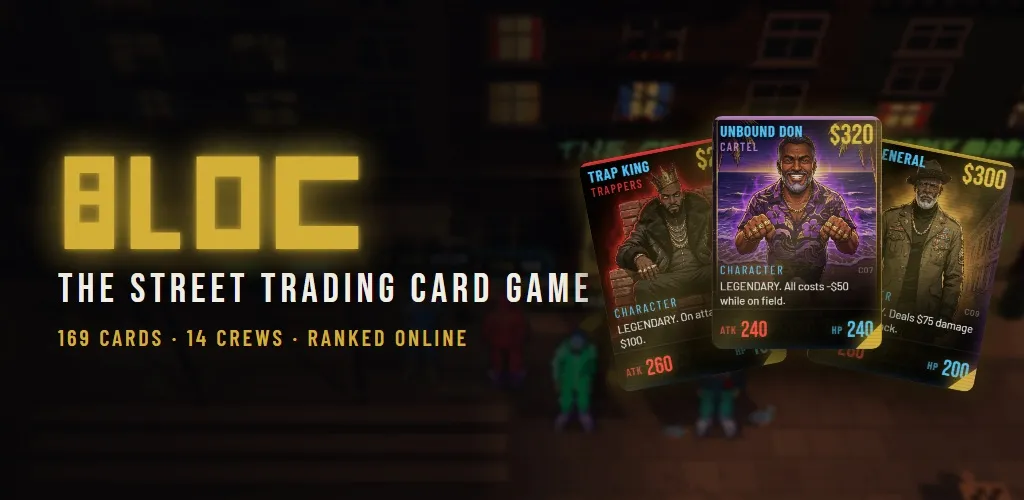
BLOC, a street trading card game, is mostly menus, cards, a deck builder and online matches. It’s built as a JavaScript web app with a Three.js 3D lobby, runs in the browser, and ships to Google Play through Capacitor, with Supabase behind it for player accounts and game data. One codebase serves both the web and Android. (Read the case study.)
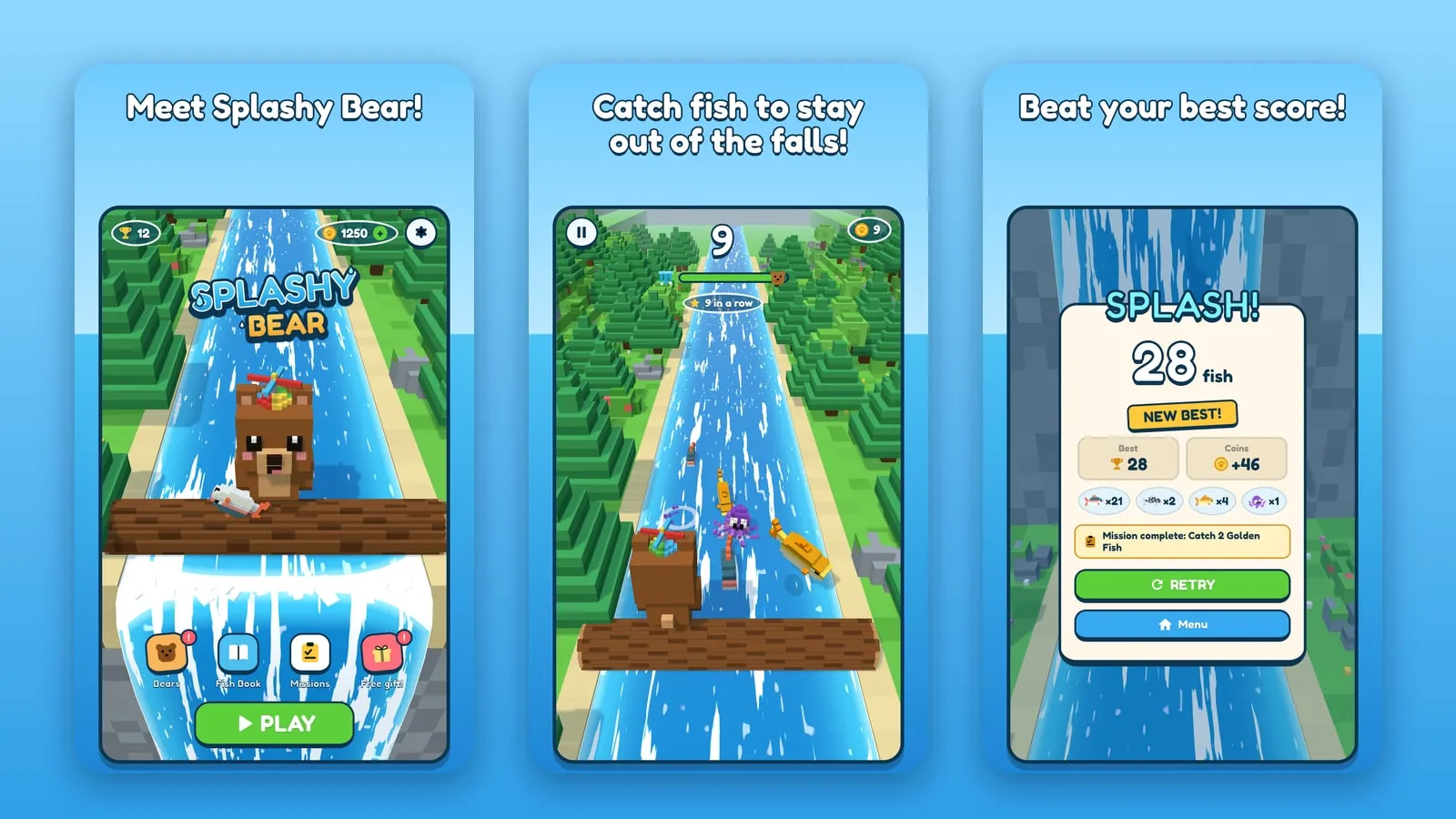
Splashy Bear, an arcade game for all ages, is a fast, physical game: a voxel bear on a log, a rushing river and fish leaping out of the water. It started as a browser prototype, then moved to Unity for the store release: Unity renders the game, while our own C# handles the gameplay, including custom hit detection, the fish spawner and a voxel mesher. Its models are built in Blender, and its leaderboard runs on Supabase. (Read the case study.)
Both are games, but the choice followed what each one is mostly made of. BLOC is mostly interface and data, so web technology fits. Splashy Bear is mostly real-time motion and 3D, so a game engine fits.
Questions that point to the right choice
- What is the app mostly made of? Screens and data point to the web or an app framework. Real-time 3D and motion point to an engine.
- Does it need to work in a browser? If yes, web technology gives you that almost for free.
- Which devices matter most? Android, iPhone, tablets, desktop, or all of them?
- How often will it change? Web apps are the quickest to update.
- Who will maintain it? Choose tools your team, or your partner, can support for years.
The backend matters as much as the front end
Whatever the app is built with, most apps also need a backend: user accounts, a database, and secure code running on a server. Managed services like Supabase and Firebase provide these without running your own servers, and they work with all three routes above. Both BLOC and Splashy Bear use one.
Planning an app? Tell us what it needs to do, and we’ll recommend the approach that fits your budget, your timeline and your users. You can also read more about our mobile and cross-platform work.